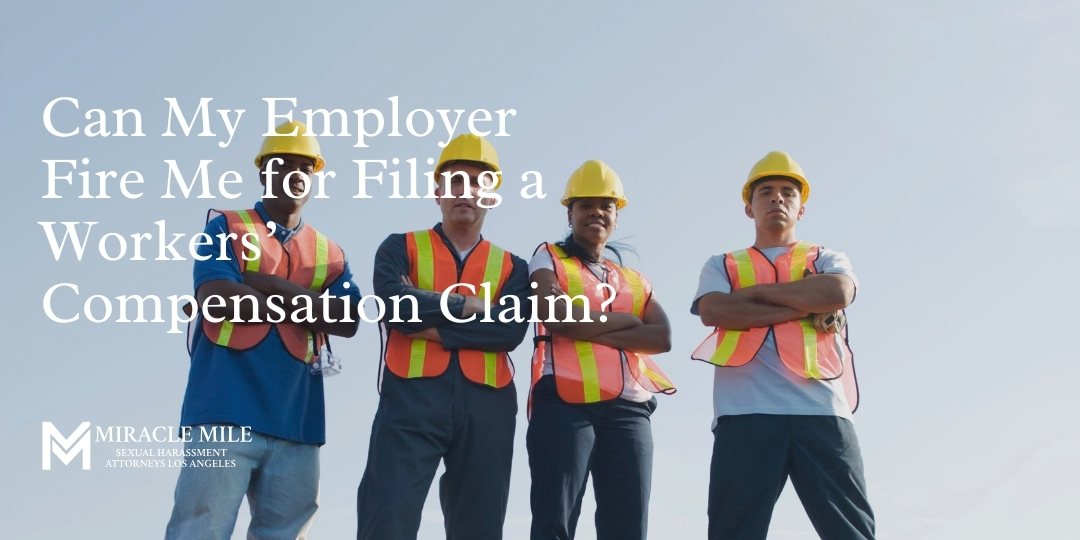
Can My Employer Fire Me for Filing a Workers’ Compensation Claim?
In California, an employer generally
cannot lawfully fire you because you filed a workers’ compensation claim,
planned to file a claim, reported a work injury, or received workers’
compensation benefits. State law protects employees from retaliation for using
the workers’ compensation system. If an employer terminates, demotes,
threatens, disciplines, or otherwise penalizes a worker for asserting these
rights, the employer may face legal consequences.
At the same time, many workers are fired
shortly after reporting an injury and are told the decision was based on
attendance, performance, restructuring, misconduct, or inability to work.
Whether the termination is illegal often depends on the timing, the employer’s
stated reason, the records in the file, and whether the employer treated the
injured worker differently after the claim was made.
If you were
injured on the job and lost your position after speaking up, filing paperwork,
or requesting medical care, it is important to understand how California law
applies.
California law protects employees who file workers’
compensation claims
California Labor Code section 132a
prohibits discrimination against an employee because the employee filed or made
known an intention to file a workers’ compensation claim. The law also protects
workers who receive a rating, award, or settlement under the workers’
compensation system.
Protected conduct can include:
●
Reporting a workplace injury or illness
●
Asking for medical treatment after a work-related injury
●
Filing a workers’ compensation claim form
●
Telling a supervisor you intend to file a claim
●
Testifying or participating in a workers’ compensation matter
●
Receiving temporary disability or permanent disability benefits
If an employer
takes harmful action against you because of any of these activities, that may
support a retaliation claim under California law.
Can an employer ever fire an employee after a
workers’ compensation claim?
Yes. Filing a workers’ compensation
claim does not create absolute job protection. An employer may still terminate
an employee for a legitimate, non-retaliatory reason. Examples may include a
true layoff affecting multiple employees, documented misconduct, serious policy
violations, or business closures.
Employers also do not have to hold a job
open forever if an employee cannot perform essential job duties and no
reasonable accommodation is available. In some cases, additional laws such as
disability discrimination laws, family and medical leave laws, and leave of
absence policies may also apply, which means the analysis often extends beyond
the workers’ compensation claim itself.
The central legal
issue is motive. If the real reason for the firing was the workers’
compensation claim or the workplace injury, the termination may be unlawful
even if the employer gives another explanation.
Common signs of illegal retaliation after a work
injury
Retaliation is often proven through
circumstantial evidence. Employers rarely admit they fired someone for filing a
claim. Warning signs may include:
●
The firing happened soon after you reported the injury or filed
the claim
●
You had a positive work history before the injury
●
Your supervisor became hostile after learning about the claim
●
You were written up for reasons that were never raised before
●
The employer suddenly claimed poor performance without prior
documentation
●
Other employees were treated more favorably under similar
circumstances
●
The employer discouraged you from seeking medical treatment or
reporting the injury
●
You were pressured to say the injury happened off the job
●
Your schedule, duties, pay, or position changed after the claim
●
The employer failed to discuss accommodation options after work
restrictions were issued
Any one fact may
not be enough by itself, but a pattern can help show retaliation.
What counts as retaliation besides termination?
Retaliation is broader than firing.
California employees may have a claim if an employer took adverse action
because of a workers’ compensation claim or work injury. Adverse actions can
include:
●
Demotion
●
Reduction in hours
●
Cut in pay
●
Unfavorable schedule changes
●
Disciplinary write-ups
●
Suspension
●
Harassment
●
Threats
●
Transfer to a less desirable position
●
Refusal to reinstate after medical release
In many cases,
workers experience a series of actions that make continued employment
difficult. Those facts may still support a retaliation or discrimination claim.
Workers’ compensation retaliation and disability
discrimination can overlap
A workplace injury can lead to more than
one legal issue. After an injury, an employee may develop temporary or
long-term physical restrictions. If the employer responds by refusing
accommodation, ignoring medical restrictions, or terminating the worker because
of those limitations, disability laws may come into play.
California’s Fair Employment and Housing
Act may require employers to provide reasonable accommodation and engage in a
timely, good faith interactive process if the employee has a qualifying
disability or medical condition. Depending on the facts, a worker may have
claims involving:
●
Workers’ compensation retaliation
●
Disability discrimination
●
Failure to accommodate
●
Failure to engage in the interactive process
●
Wrongful termination in violation of public policy
●
Retaliation for taking protected medical leave
This is one reason
injured workers should look at the full employment picture rather than focusing
only on the workers’ compensation case.
Examples of situations that may support a claim
A warehouse employee reports a back
injury, seeks treatment, and files a workers’ compensation claim. Within a
week, the employer begins issuing write-ups for minor issues that were
previously ignored. Two weeks later, the employee is fired for alleged performance
problems. If the timing is suspicious and the employer has little real
documentation, the employee may have a retaliation claim.
An office worker injures her wrist and
receives restrictions from her doctor. The employer refuses to discuss modified
duties and terminates her, saying the company needs someone who can work
without limitations. That situation may raise disability accommodation issues
and wrongful termination concerns in addition to workers’ compensation
retaliation.
A construction
worker tells his supervisor he plans to file a claim after a jobsite injury.
The supervisor responds with threats and cuts his hours. Even if the worker is
not immediately fired, the reduced hours and threats may qualify as unlawful
retaliation.
What should you do if you were fired after filing a
workers’ compensation claim?
If you believe your employer fired you
because of a workplace injury or claim, take steps to protect your rights as
soon as possible.
●
Save emails, texts, write-ups, schedules, medical notes, and
claim documents
●
Write down a timeline of what happened, including dates of
injury, reports, treatment, and termination
●
Identify witnesses who saw your treatment at work change after
the injury
●
Request a copy of your personnel file if appropriate
●
Avoid signing severance or settlement documents without legal
advice
●
Speak with a California employment attorney promptly because
deadlines may apply
Strong
documentation can make a major difference when proving that the employer’s
stated reason was pretext for retaliation.
What remedies may be available?
The available remedies depend on the
type of claim and the facts of the case. In some matters, an employee may be
able to recover:
●
Reinstatement
●
Lost wages
●
Lost benefits
●
Compensation for emotional distress
●
Penalties or increased compensation under applicable law
●
Attorney’s fees and costs in certain claims
Labor Code section
132a includes specific remedies in the workers’ compensation system. Additional
damages may be available if the worker also has a civil claim for
discrimination, retaliation, or wrongful termination.
How Labor Code 132a claims differ from other
employment claims
Many workers are surprised to learn that
a workers’ compensation retaliation claim and a wrongful termination lawsuit
are not always the same thing. A Labor Code 132a claim is generally pursued
within the workers’ compensation system. Other claims, such as disability
discrimination or wrongful termination in violation of public policy, may be
pursued in civil court.
The best legal
strategy depends on the facts, the available evidence, and how the injury
affected your ability to work. Some employees may have one claim, while others
may have several.
|
Issue |
Possible Legal Path |
|
Fired for filing a workers’ compensation |
Labor Code 132a claim |
|
Fired because of medical restrictions or |
Disability discrimination claim |
|
Employer refused modified work or |
Failure to accommodate and interactive |
|
Termination after protected leave related |
Leave retaliation or interference claim |
How employers try to defend these cases
Employers often argue that the firing
had nothing to do with the workers’ compensation claim. Common defenses
include:
●
The employee violated a company policy
●
The employee had a documented performance problem
●
The position was eliminated for business reasons
●
The employee could not perform essential job functions
●
The company was unaware of the intent to file a claim
These defenses are
not always valid. The question is whether the evidence supports the employer’s
explanation. Inconsistencies, shifting reasons, weak documentation, and
suspicious timing can help expose retaliation.
Why timing matters
Timing often plays a large role in these
cases. If an employer takes adverse action soon after learning of an injury or
claim, that timing may support an inference of retaliation. For example, if an
employee receives years of positive feedback and then is fired days after
requesting workers’ compensation benefits, the sequence of events may be
important evidence.
Timing alone does
not automatically prove an unlawful motive, but it can be a strong factor when
combined with other evidence.
Speak with a California employment lawyer about your
rights
If you were fired, demoted, threatened,
or pushed out after reporting a workplace injury or filing a workers’
compensation claim in California, you may have legal claims beyond the workers’
compensation case itself. Miracle Mile Law Group helps California employees
evaluate retaliation, wrongful termination, disability discrimination, and
related workplace claims. If this is happening to you at work, contact Miracle
Mile Law Group to discuss your rights and your options for pursuing legal
action.

Related Posts